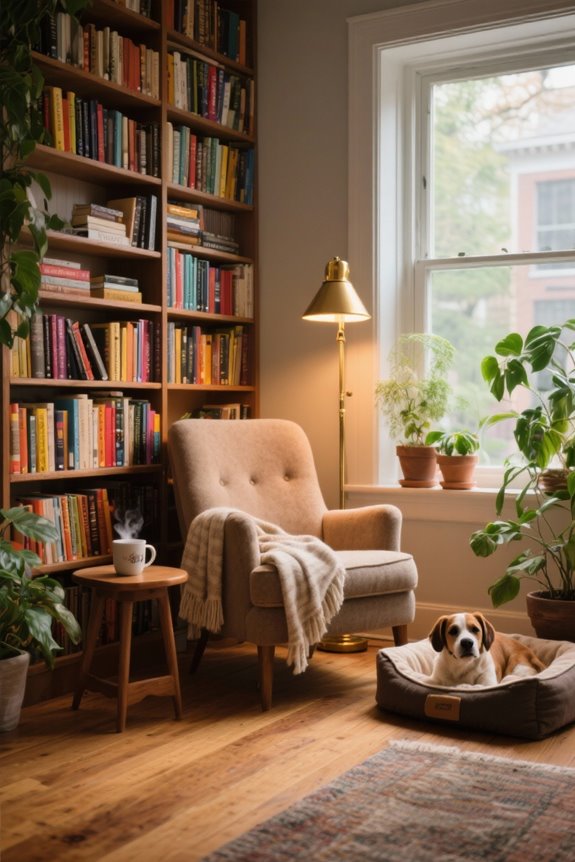
Creating a reading nook for children with sensory needs is a brilliant idea! Envision this: soft bean bags, superhero art, and twinkling fairy lights—where literacy meets pure magic! Sun-drenched corners (think light pastel shades—sunny yellows or calming blues) make the perfect spot. Cozy cushions, weighted blankets, and sensory tools (yes, fidget spinners are a must!) invite exploration and focus. With clever decor choices and personalized touches, every nook can spark joy and creativity—stay tuned to reveal even more awesome tips!
Key Takeaways
- Choose a quiet, clutter-free location near a window to maximize natural light and minimize distractions.
- Utilize comfortable seating like plush bean bags or child-sized rockers to enhance tactile comfort during reading.
- Incorporate warm-toned LED lighting and customizable options for a soothing visual atmosphere.
- Personalize the nook with decor, including favorite character decals and framed book quotes, to make it engaging.
- Add sensory tools like weighted blankets and fidget items to help maintain focus and enhance the reading experience.
Importance of a Reading Nook for Sensory Needs
Imagine a cozy corner transformed into a magical retreat just for kids—doesn’t that sound delightful? A reading nook designed for children with sensory needs is crucial for creating a calm space where they can immerse themselves in their favorite stories. It’s more than just a corner; it’s a sanctuary full of soft bean bags, cheerful blankets in bright colors, and twinkling warm LED lights that embrace them like a gentle hug! Personalized touches, like superhero wall art, spark excitement while textured pillows cater to their sensory cravings! With regular reading, these nooks nurture literacy and communication skills, fundamental for their educational journey. Fun fact: it also cultivates that love for reading, like Disney creates magic! Why not sprinkle some enchantment into their lives? Consider incorporating motion sensor shelf lights which provide customizable lighting modes and automatic activation, enhancing the sensory experience for children in the nook.
Selecting an Ideal Location

Creating a reading nook perfect for children involves a keen eye for selecting the right location! Choose a quiet, underused corner in your home—think cozy spare rooms, those awkward hallway edges, or even shy bedroom corners—ideally near a window for some dreamy natural light. The nook should be a safe haven, free from clutter and unsafe objects, allowing kids to immerse themselves in their books with zero distractions. Speaking of distractions, establishing guidelines like designated quiet times guarantees this calming environment stays true to its purpose! A strategic layout, allowing easy movement and organization, is essential. Who wouldn’t want to turn that nook into a mini-library? After all, reading should feel as magical as entering Hogwarts—minus the wand and robes! Adding proper lighting is crucial to reduce eye strain and enhance the reading experience.
Comfortable Seating Options

The perfect seating arrangement can transform a reading nook from simply functional to truly enchanting! Comfortable seating options, like plush armchairs and soft bean bags, maximize tactile comfort for kids with sensory needs. Imagine a child-sized rocker—like something out of a fairytale—creating a cozy spot for storytime magic. Or think floor cushions, which transform the nook into a relaxed zone where reading feels like a delightful escape! Pile on throw pillows for added comfort that also whisper sweet proprioceptive input—kids will feel snug and secure. And don’t forget soft blankets for those chillier days, enveloping them in warmth! Remember, proper sizing encourages independence, making it easier for little ones to grab their favorite books and dive right into adventure! Consider adding ergonomic designs that help maintain proper body alignment, ensuring comfort for extended reading sessions.
Creating the Right Lighting Atmosphere
Good lighting can be the secret sauce that transforms an ordinary reading nook into an extraordinary adventure zone! To create the perfect lighting atmosphere, consider warm-toned LED bulbs—they’re gentle on little eyes and help ward off visual fatigue, which is like a lifesaver during those long reading marathons. Pair ambient light sources, like well-placed lamps, with glorious natural sunlight streaming through the windows; balance is key! Dimmable lights allow kids to customize brightness to their liking—no one likes a flashlight-level glare when diving into a fantasy world! Don’t forget whimsical fairy lights or fiber optic strands—they add a sprinkle of magic! Layering different light types, from ambient to task to accent, caters brilliantly to various sensory needs, promoting relaxation and focus effortlessly! Consider using smart bulbs with dimming capabilities to fine-tune the lighting as needed, creating a versatile and adaptive environment.
Personalization Through Decor
For a child, a reading nook can’t just be cozy; it also needs to scream, “This is mine!” By incorporating framed quotes from beloved books—like those from the whimsical world of Dr. Seuss—personalization through decor takes center stage! Imagine this: colorful wall decals featuring favorite characters, nameplates that make it official, and stacks of well-loved books creating a cozy, inviting vibe. Don’t forget vibrant houseplants for a touch of nature—and soothing, soft furnishings in their favorite colors! A special spot for a beloved blanket adds warmth, security, and that all-important “this is me” feeling. Incorporate vibrant decor such as colorful pillow covers and cushions to enhance the visual appeal and comfort of the reading nook. For more tips, grab our FREE guide and reveal the magic of personalizing your child’s unique sanctuary! Reading can be so much fun!
Incorporating Tactile Elements
Creating a reading nook that sizzles with excitement and invites tactile exploration is a fantastic way to captivate young readers! Imagine a cozy corner where textured throw pillows and soft blankets hug little ones while they read. Adding sensory boards—complete with fuzzy pom-poms and silky fabrics—encourages engagement with diverse materials, providing essential sensory input. Weighted blankets? Those glorious, soothing embrace machines ground children, making them feel cozy and ready for adventure in their stories. Throw in squishy balls and textured panels, and voilà—the multisensory paradise is complete! Even a bin of sand or rice invites delightful exploration, calming jitters before diving into books. So, who wouldn’t want to get lost in such a thrilling, tactile fantasy? Exciting, right? Engaging assembly experiences from DIY Book Nook Kits can also be a delightful addition, offering creative expression and bonding opportunities for young readers and their families.
Functional Design Considerations
Strategically choosing the right location for a reading nook can make all the difference—while it might not seem thrilling, a well-placed corner near a window can be pure magic! Imagine basking in soft, natural light while comfy bean bags—those plush, inviting chairs that practically hug you—await! Warm-toned LED lighting, set to adjustable intensities, creates a cozy vibe, keeping little eyes from straining. Personal touches—favorite superhero posters or whimsical artwork of dancing unicorns—are essential, right?! To foster independence, low bookshelves allow kids to easily grab their beloved tales. An organized oasis with toy bins keeps clutter at bay, enhancing focus and enthusiasm. Who wouldn’t want their literary adventures to unfold in such a dreamy space?! It is important to consider the weight capacity of at least 300 lbs for any seating option to ensure stability and safety for children.
Establishing a Sense of Enclosure
While many might not realize it, establishing a sense of enclosure in a reading nook transforms it into a magical retreat for children. Envision this: whimsical tents, fluttering canopies, or even curtains in soft pastels—these elements weave together a cozy, safe haven. It’s like having your very own Hogwarts, minus the owls! Incorporating plush cushions and fluffy blankets lets kids sink in, creating tactile barriers that invite relaxation. And let’s not forget location—positioning this nook in a quiet corner, away from family traffic, minimizes sensory overload. Add twinkling fairy lights or gentle lamps for an enchanting glow! Custom lighting arrangements can enhance the ambiance, making the reading experience even more immersive. Who wouldn’t want to immerse oneself in a book in such a fabulous space? A reading nook awaits!
Encouraging Regular Use
Building a cozy reading nook is just the beginning—what’s next? To really get those little bookworms snuggling up in a space piled high with pillows, one must sprinkle in some magic! First off, layer in plush cushions and soft blankets, creating that inviting ambiance. Establish a daily reading routine with visual cues: think colorful timers or whimsical “reading time” signs. Personalization is key—try placing beloved books and sensory-rich elements, like plush toys or textured panels, to ignite curiosity! But don’t forget parent-child interaction; it’s essential! Read together, discuss stories, and voilà! You’ll foster a positive association with the nook. Engaging in these projects can provide a relaxing DIY experience. A reading retreat awaits—exciting stories are just a cozy nook away! So, let the literary adventures begin!
Utilizing Cozy Textiles
Cozy textiles can transform a reading nook into a child’s sanctuary! Soft blankets, plush throw pillows, and cushioned floor mats create a warm embrace—perfect for little readers seeking comfort and safety. Weighted blankets—think of them as gentle hugs—offer deep pressure input that many sensory-sensitive children find incredibly soothing. Layering a mix of fuzzy, smooth, and knitted fabrics not only invites tactile exploration but also aligns with individual preferences, creating a sensory wonderland. A chic bean bag or vibrant floor mat can provide just the right comfy spot for diving into fantastic adventures in books. By incorporating cozy textiles, parents can craft an inviting space that reduces anxiety and makes reading feel like the world’s best escape! Additionally, metal bookmarks made from high-quality, rust-resistant materials like stainless steel or brass, can serve as a functional and stylish tool for children to easily mark their favorite stories, enhancing their reading experience.
Engaging With Sensory Tools
Engaging with sensory tools can elevate the reading experience to new heights—imagine this: a whimsical nook designed not just for reading but for exploring the vibrant world of sensations! Think plush, textured pillows, and those oh-so-fluffy blankets wrapping kids in cozy comfort as they immerse themselves in their favorite tales. Weighted blankets? Yes, please! They can ground little ones, helping them focus like a Jedi on their reading journey. And don’t forget sensory bottles—these magical creations offer fascinating auditory and visual stimulation. A sprinkle of decorative fairy lights, perhaps in serene aqua or soft lavender, sets a peaceful atmosphere. Finally, include fidget items for a touch of fun! After all, managing sensory needs shouldn’t be a kiddie chore—it’s an exciting adventure!
Sharing Your Reading Nook Journey
How can sharing the journey of creating a reading nook spark creativity in others? Documenting each tactile triumph—like that perfect soft blue paint from Benjamin Moore or those cozy, hand-knit cushions—can truly inspire! A quick post here, a photo there, and voilà—community connections bloom! Families excitedly exchange ideas, crafting unique spaces adorned with weighted blankets and plush toys, enhancing focus. Sharing your reading nook journey isn’t just about design; it’s about cheerleading for one another. Got questions? Drop an email address in the comments! Encouraging feedback just might lead to innovative twists on your own sensory haven. So, let’s rally together, spark ideas, and make reading spaces delightful for all kids—because who wouldn’t love a nook filled with creativity?
Frequently Asked Questions
How Can I Choose Books for Sensory-Sensitive Children?
To choose books for sensory-sensitive children, focus on book selection that features calming illustrations, engaging textures, and relatable themes. Prioritize stories with predictable narratives and soothing language to enhance their reading experience and comfort.
What Age Range Is Best for a Sensory Reading Nook?
Choosing the right age appropriateness for a sensory reading nook is essential. Typically, ages 3 to 12 are ideal, striking a balance to engage young minds while providing comfort, creating a space where they can flourish.
Are There Any Specific Safety Concerns for Sensory Reading Nooks?
Safety concerns for sensory reading nooks include Design Considerations such as soft furnishings to prevent injuries, non-toxic materials, secure shelving to avoid tipping, and ensuring proper lighting to reduce overstimulation for vulnerable children.
How Do I Encourage Reluctant Readers to Use the Nook?
To encourage reluctant readers, incorporating engaging reading games can spark interest. Varied activities, like story-related puzzles or interactive quizzes, can transform reading into a fun experience, motivating children to explore books within their inviting nook.
Can I Include Technology in the Reading Nook?
Yes, technology can enhance the reading nook through thoughtful tech integration. Studies suggest interactive e-books and educational apps can engage reluctant readers, promoting a more immersive and enjoyable reading experience for children with varying sensory needs.